
Towering at 14 to 19 feet tall, giraffes are the world’s tallest land animals. Children and adults alike are fascinated by this iconic species — there is no other animal on Earth that resembles a giraffe with its elongated neck, stilt-like legs, and even enviable eyelashes! The length of their necks, faces, and tongues (up to 50 cm in length) allow them to select and eat the leaves off of bushes and trees. Eating up high allows for less food competition from other animals that forage below, which means overall less stress on the ecosystem. Their necks are also used as weapons by sparring males. And what looks like “horns” on a giraffe’s head are also used as weapons while fighting. They are called ossicones. These conical-shaped bones are covered in skin and hair (unlike other animal horns or antlers) and grow throughout the lifetime of a giraffe.

To cope with such long legs, giraffes have a special way of walking. Unlike most other animals, their front and back limbs walk in sync with their right side and left side. They can also run quite fast — up to 56 km/hr which is enough to outrun a lion! Drinking with such long legs and necks is quite challenging and they can fall victim to predators in this vulnerable position.
A giraffe’s pattern is immediately recognizable by its distinctiveness — just like how we would immediately recognize a tiger’s stripes. Reticulated giraffes are dark with white line patterns. Scientists identify individual giraffes by the patterns on their coats because each giraffe has its own unique pattern. There are nine subspecies of giraffes across Africa. Giraffes have roamed our planet for over a million years.
And so it may be hard to believe that these magnificent creatures are now facing what some are calling a “silent extinction” due to a lack of global awareness. In areas where they once roamed plenty, their numbers have been drastically and alarmingly reduced by about 80% in the last 15 years alone! In the northeast of Kenya, there were over 36 000 and today there are between 5000 and 7000. What is happening? Poaching, trophy hunting, and habitat encroachment are responsible for the demise of the giraffe population. Some trophy hunters kill giraffes simply for their tails as they are considered status symbols. Poverty coupled with habitat encroachment leads people to kill giraffes for food and for their coats to sell. The few scientists working on the ground trying to help giraffes believe that educating and involving the local communities could help to save some of the remaining giraffes. Tactics such as naming giraffes after community members has helped to make them feel involved and become stewards of giraffes.
One incredible individual who has spent her entire life researching the giraffes that she loves is biologist Dr. Anne Innis Dagg. Dr. Dagg is to giraffes what Jane Goodall is to chimps. A pioneer in her field — and being a woman — she faced many challenges throughout her career while venturing to Africa on her own as a young woman. Now with years of invaluable research collected and respect earned, a feature-length documentary has been filmed about the life of Dr. Dagg called The Woman Who Loves Giraffes. This important film also brings much-needed attention to the silent extinction.
Dr. Dagg continues to inspire others to collect further research on wild giraffes in Africa. For example, giraffes are considered to be more or less mute, however some scientists now suspect that giraffes may be communicating out of our hearing range. Recent research on giraffe behaviour has also revealed more about community and social bonds between giraffes. It has been observed that mothers share “babysitting” responsibilities for each other and even allow suckling. A field researcher also discovered an incredibly strong bond of a mother giraffe that was grieving her dead calf. The mother did not leave her deceased calf for five whole days — not even to eat. She stayed by its side. Continuing research and sharing observations like these could lead more people to care about these gentle giants and take action to save them. Let’s break the silence on this silent extinction and sound the alarm! Together, let’s protect our giraffes — now.
To take immediate action to help giraffes, please visit: https://thewomanwholovesgiraffes.com/take-action/

Sources:
https://www.cbc.ca/natureofthings/episodes/giraffes-the-forgotten-giants
https://www.nationalgeographic.com/animals/mammals/g/giraffe/
https://en.wikipedia.org/wiki/Ossicone
https://africageographic.com/blog/7-facts-giraffe/?mc_cid=e42d6b8762&mc_eid=6fa719f40a

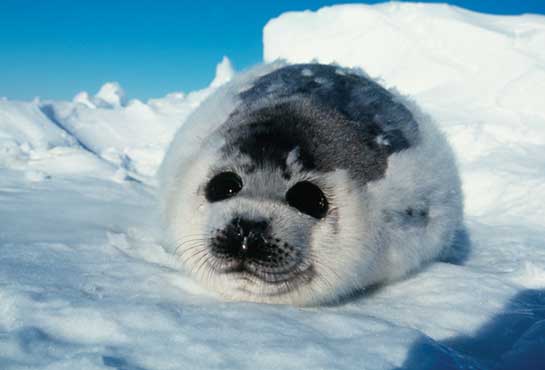
 So why are seals being killed? From 1983 to 1995, about 55 000 seals were killed annually for profit. For the 1996 hunt, the federal government increased the quota (total allowable catch) on commercial seal hunting and provided subsidies to encourage sealing. A whopping 267 000 seals were killed that year. The root of the government’s plan was to find a new way for East Coast fishermen to make a living since the cod fishing industry had collapsed. Cod was almost overfished to extinction. Using the seals as scapegoats, the government blamed the seals for eating all the cod. This gave them a “good” reason to promote sealing as alternate employment. Scientists and biologists have agreed that cod is only a very small percentage of a seal’s diet, if at all. Furthermore, seals consume the predators of cod which balances out the ocean’s food web. Healthy fisheries need healthy and prosperous seal populations. Despite these scientific facts, the brutal seal hunt carries on as a deceitful and failing means of alleviating the collapse of a cod fishery brought on by the fishers themselves. By 2015, the quota was a staggering 468 000. How many seals were actually killed in 2015? Statistics show about 35 000, lower than previous years due to the sealing industry declining. In 2016, the quota was 400 000 and sealers killed over 66 000 harp seal pups. In 2017, almost 81 000 harp seals were killed. The quotas are not matching up with reality. Arguably, there is no justification for such high quotas and for killing tens of thousands of innocent wild animals.
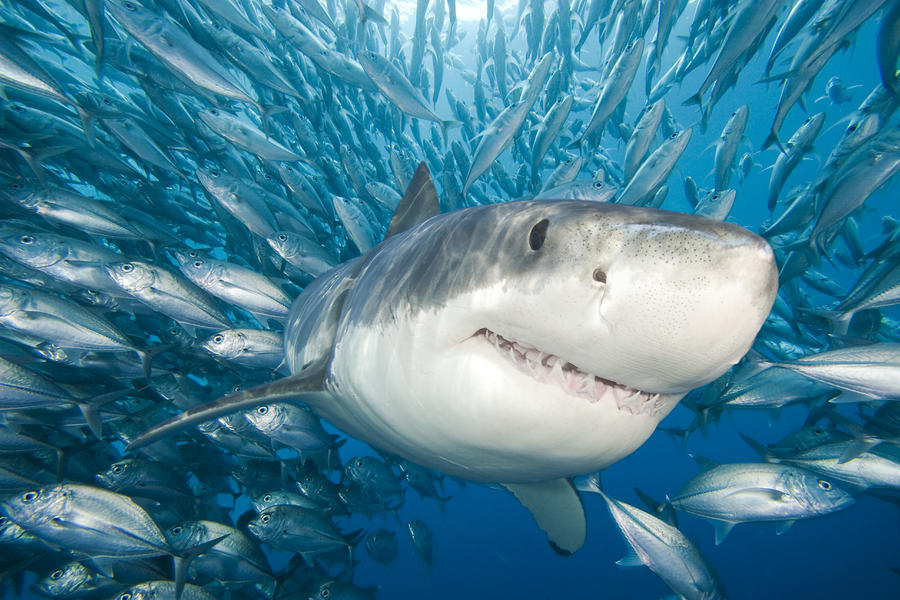
 rst shark encounter and fell in love with the species. Over the years, Rob discovered that sharks were nothing like what we had been taught growing up. Rather, Rob describes sharks as “sophisticated, intelligent, often shy creatures that are not interested in eating humans.” His shark experiences were so peaceful that he often stroked and even hugged them. Sharks have been on our planet for over 450 million years — before dinosaurs roamed the Earth. As an apex predator, sharks are integral to the oceans’ ecosystems. They keep our oceans healthy by balancing out the numbers of our oceans’ species. And our oceans’ species are responsible for giving us half of the oxygen in the air that we breathe. The oceans are the most important ecosystem for human survival, providing oxygen, regulating the climate, and feeding billions of people. On average, sharks kill five people per year. That is less deaths than people killed by lightning or falling out of bed. Now compare that to humans killing 150 million sharks per year. As Rob clearly pointed out, “The truth is that sharks have much more to fear from us.”
 reason sharks are being killed at alarming rates is for shark fin soup. A very expensive delicacy considered a Chinese tradition. To get shark fins (their limbs), a shark is caught, its fins hacked off, and then it is thrown back into the ocean to die an agonizing slow death on the ocean floor.
 er of the Sea Shepherd Conservation Society, described seeing [the shark’s] “shocked eyes open, allowing us, for a moment, to glimpse their pain as the spark of life was slowly extinguished.” On top of finning being cruel and a complete waste of almost the entire shark’s body, fins are tasteless and have no nutritional value.
 “We’re facing a world by 2050 that has no fish, no reefs, no rainforest, and 9 billion people on a planet that already can’t sustain 7 billion people. So it’s going to be a really dramatic century unless we do something about it. … We must act now and we need your help.”


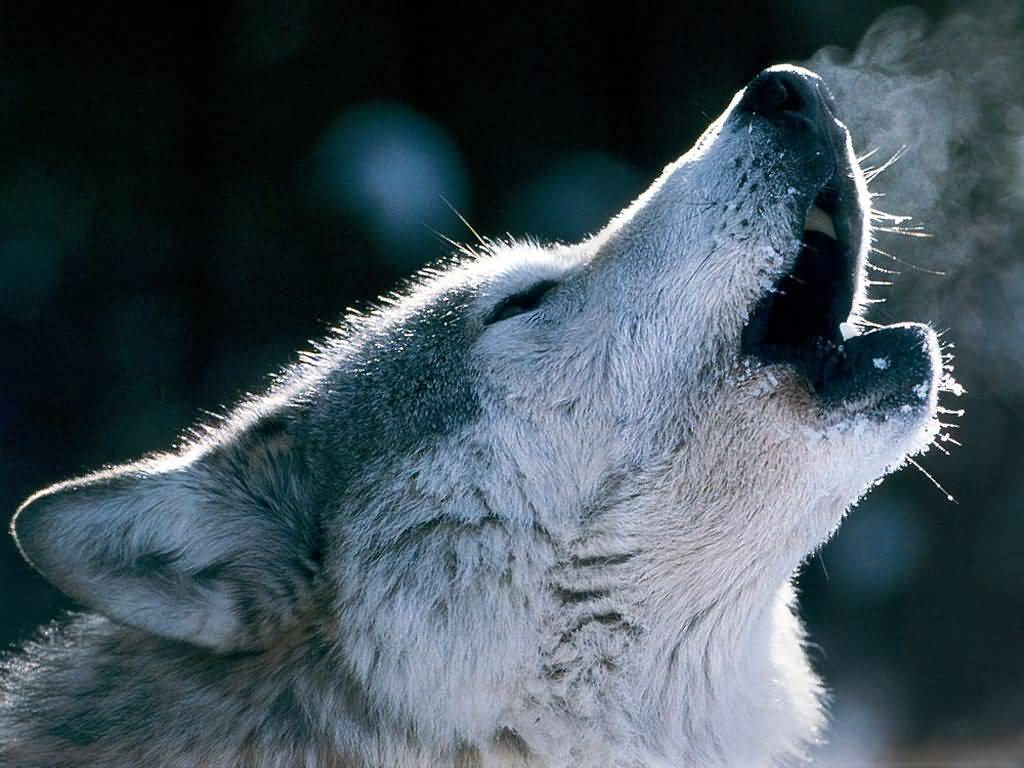
 Many First Nations cultures respect, learn from, and revere the wolf. They create totems in its honour. Wolf is one of the most powerful animal spirit guides. Being an essential predator, wolves are integral to the health of ecosystems. They are so integral, that when the near-extinct wolf was re-introduced in Yellowstone National Park in 1995, the elk population stabilized and many species rebounded. The wolves even changed the rivers! See how by watching the fascinating short video below.
 oint of collapsed exhaustion. Entire packs have been wiped out. This killing is federally funded by the Department of Agriculture’s Wildlife Services – what environmentalists call a “secret agency.” In 2015 alone, the USDA’s report showed that Wildlife Services killed a whopping 3.2 million wild animals! And many kills go unreported. These alarming statistics are being called a “wildlife bloodbath.” As part of this, environmental groups state that the wolf-killing program is outdated, “senseless and cruel.” To make matters worse, the U.S. Fish and Wildlife Service is pressuring to delist the grey wolf from the endangered species list nationwide. It is feared that this would spell certain doom for wolves.


 Elephants are endangered. About 100 elephants are being slaughtered every day. THEY ARE STILL ALIVE while the tusks are being savagely hacked out from their heads. Unimaginable… They suffer excruciating pain and family members are exposed to and are aware of all the terror. Killing the alphas, which have the largest tusks, disrupts the herd’s entire social structure and creates many traumatized orphans. Habitat destruction and climate change are also contributing to the plight of elephants. Experts predict that elephants could be extinct from the wild in 10 or 20 years. We just CANNOT allow that to happen.


